
Hello,
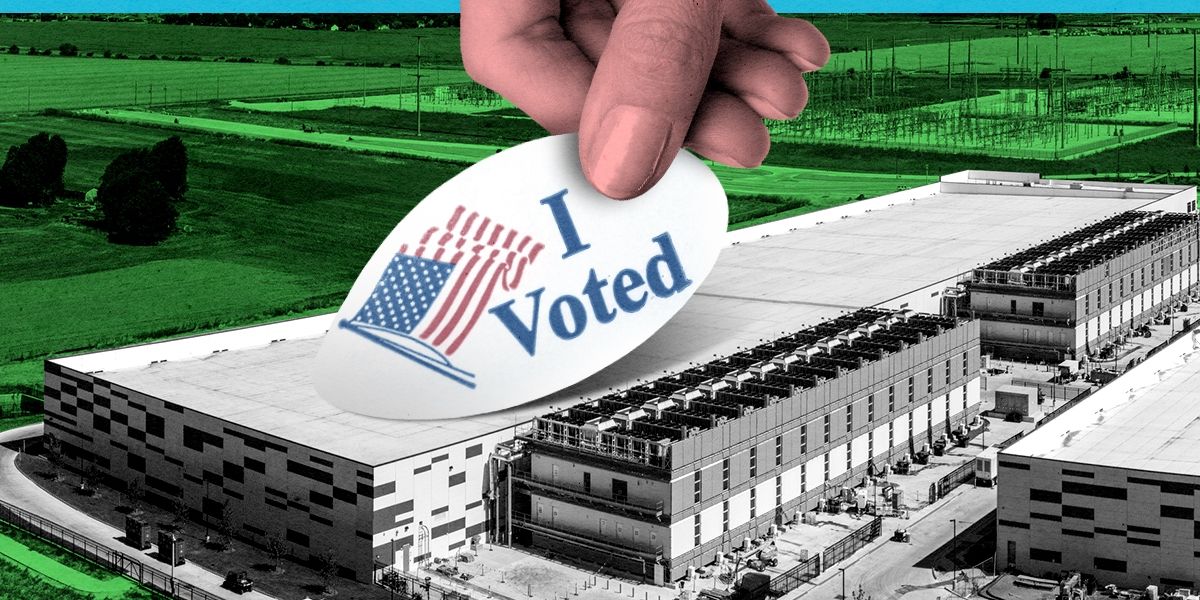
Well, a lot has changed since I last put together one of these news roundups. The midterm elections in the U.S. certainly sparked hope for a lot of climate tech enthusiasts, though they also portend serious complications for data center developers’ plans, which also impacts a lot of novel clean energy technologies that were draftings off the AI themes’ tailwinds (basically every data center ban on ballots passed). I won’t analyze too much of that myself, but will link out to lots of good reading on the topics.
As far as my focus within the climate-sphere is concerned, at ARC, we’re still riding high on continued momentum from the Global Risk and Stabilization Summit that we hosted in Reykjavík, Iceland, almost a month ago now. The Summit brought together 250 practicioners across domains and disciplines to discuss catastrophic climate risks and what to do about them. In the month since, there’s been a veritable wave of follow-up posts and discussion, which I’ll round up for you all seperately in these pages this week.
And on the personal front, in terms of the perennial question of where in the world I am, well, since Saturday I’ve been in Omaha, San Francisco, Philadelphia, and now I’m New York, en route to Germany, to bury my grandmother. No huge condolences necessary; she lived a wonderful life to 94 and it was time, as people often say. She was 7 years old when WWII broke out, lost two brothers to the war, and a 3rd was a POW for 5 years, though he did make it home and then became a catholic priest for 60 years. She never complained, nor was she embittered, despite that start to life. I wrote more about her and my relationship, which—while fraught at times, was beautiful—a while ago here if you’re interested in some creative writing (fair warning, it may be a bit of a tear jerker, at least so I have been told by several readers).
Anywho, let’s get to all the news, shall we?
ONE STORY IN A SENTENCE AND A CHART
• Data centers lost badly at the ballot box: In nine states, the governor or governor-elect has already paused new data centers or pledged to, those states account for 158.6 GW of planned capacity (41% of the total U.S. pipeline), and another 69.2 GW (18%) is planned in states where the winner wants new rules or tax-break changes. Link.

NEWS, DATA, AND HEADLINES
First, if you’re here for election and post-election implication coverage—down to specific dates, bills, and ballot measures—I’ll just immediately route you elsewhere for better and more in-depth analysis than I have time for at any point in the forseeable future:


The Earth system, stabilization, and climate interventions
• October was the warmest October on record in the Copernicus' ERA5 dataset (a whopping 1.75°C above preindustrial levels. Link.
• The European Commission proposed rules requiring member states to plan for 3°C of warming (especially as it pertains to expanding adaptation efforts alongside mitigation), the first such legal proposal. It also expects member nations to submit updated and robust adaptation plans by the end of 2030. Link.
• Updated meta analysis from Amazon Conservation found that 15% of the Amazon basin’s original primary forest is already gone, and that tipping points beyond which parts of the ecosystem could shift into an irreversible destabilization towards a more savannah-like alternate stable state could thus be considerably closer than previously thought (the rule of thumb for the Amazon’s tipping point is at ~25% deforestation / loss. Link.
• Greenland’s ice sheet just logged its 30th consecutive year of net ice loss in the 12 months to August 2026. The last year it gained ice was 1996. Link.
• A new scientific paper accounts for sub-surface and nonlinear melting dynamics pursuant to the Thwaites glacier, concluding it could melt much faster than previously predicted (which would also drive substantial global sea level rise). Similar non-linear melt dynamics are likely relevant to many glaciers and ice sheets, including the Greenland Ice Sheet and West Antarctic as well (which, together, hold about 10 meters of potential global sea level rise). Link.
• Alaska’s Kenai Peninsula Borough passed what may be the world’s first permit-and-disclose law for weather modification and climate interventions, following Rainmaker’s surprise cloud-seeding tests over Homer this summer. Anyone seeking to operate on borough land now needs a lease or land-use permit detailing chemicals, flight frequency, and intended outcomes, and geoengineering is banned outright on casual-use land. Link.
• China’s dedicated solar radiation management (SRM) budget has more than doubled, with money shifting toward targeted stratospheric aerosol injection (SAI) and low-cloud programs, per the American Council for Capital Formation. The report also points to growing government involvement, efforts to shape international standards, and a proposed International Alliance for SRM. Link.
• PermaC, an early-stage startup I’m keenly tracking, tested a biodegradable “green blanket” on thaw slumps near Fort McPherson, NWT, this summer. The uncovered part of one slump retreated five meters while the covered section held, though a government permafrost scientist says it’ll work best on small, early-stage slumps. Link.
• The U.K. refreshed its Arctic policy framework to put climate change front and center within it. The framework now positions a melting Arctic as a security risk and commits UKRI to invest £13 million (~$17.4 million) in Arctic research through 2032 alongside the Research Council of Norway. Link.
• At the same time, England officially logged its worst drought ever (at least in modern record keeping) this year. Crop harvest losses thus far amount to a year’s worth of typical British bread consumption. Link.
Clean(er) energy, electricity, and power grids
• China’s desert wind and solar bases now exceed 157 GW of combined capacity, which is more than 10% of the U.S.’s total utility-scale power generation capacity. Link.
• IRENA expects global clean energy installations to fall slightly below 2025 levels this year, citing transmission bottlenecks and trade wars. That would mark the first year in a long time (save for 2020 due to COVID). Link.
• About 16% of U.S. utility-scale solar capacity built this year came paired with batteries, up from 2% in 2017. Link.
• U.S. wind turbine orders jumped to 2.8 GW in Q2, the most since late 2023, as developers rushed to beat expiring tax credits, per Wood Mackenzie, and onshore wind is still on track for 39 GW of additions by 2030. Those numbers those improve in coming quarters after the midterm results as well. Link.
• Ørsted’s 704 MW Revolution Wind off Connecticut and Rhode Island hit full output in October despite repeated Trump administration attempts to stop it, becoming the third US utility-scale offshore wind farm in full commercial operation. BNEF now expects just 5.9 GW of U.S. offshore wind by 2035, down from 39 GW before Trump’s second term, though that could also change given the midterm results suggest Trump will be less able to slow down wind projects. Link.
• Across the Atlantic, EU wind turbine exports rose nearly 11% to $3.4 billion last year, despite China’s overwhelming dominance in the market. Link.
• The DOE conditionally committed to lend Constellation up to $5 billion to uprate 15 reactors across eight plants in Illinois, Maryland, and Pennsylvania, adding a combined 1.1 GW, about the output of a new AP1000 at far lower cost (Georgia’s two AP1000s ran over $30 billion). It’s the third multibillion-dollar Constellation uprate announcement in a month, after it also inked deals with Amazon and Google, though Constellation says it hasn’t fully committed to every project yet. Link. Link.
• The NRC accepted General Matter’s application to build a uranium enrichment plant at the DOE-owned Paducah, Kentucky, site, finishing initial review in half the usual time. The Thiel-backed startup expects approval next year, equipment installation in 2028, and first commercial output in 2029, with a second application for high-assay low-enriched uranium coming next year. The U.S. once accounted for more than 80% of global enrichment; now, it accounts for <1%. Link.
Transportation
• In China, a record two out of three light-duty vehicles (cars) sold in September were NEVs (67%), up from 6% of sales in 2020. Link.
• An automaker lobby representing nearly all major manufacturers is pressing Congress to permanently ban Chinese vehicles, after Trump said in September he’d be fine with Chinese companies building cars in the US. Chinese EVs already face tariffs above 100%. While Chinese EVs would be a boon to the inflation-addled American consumers, they’d ring what could amount to a death-knell for domestic manufacturers, as they have in other countries sans bans or large tariffs, like Germany (not to mention a national security concern). Link.
• GM will invest $750 million (with $500 million coming from a reworked federal grant) toward building hybrid versions of three crossovers in Lansing, Michigan. Link.
• Meanwhile, at the state level, Michigan has now clawed back or abandoned $800 million in incentives for EV battery projects. Link. Link.
• Ford’s Fathom electric pickup, starting at $28,350, will be the first sub-$30,000 EV from a U.S. automaker that can power a home without a separate wall-mounted inverter, thanks to an onboard unit that delivers 10+ kW of AC. Its backup hardware will run at least 60% cheaper than Ford’s first-generation setup, and Ford is working with AEP, BC Hydro, Consumers Energy, Exelon, and PG&E on common interconnection standards. Link.
• Tesla is killing the Cybertruck in 2027. Three years of sales landed in the tens of thousands, nowhere near Musk’s onetime 250,000-a-year target. The Texas manufacturing capacity will now go to making Cybercab robotaxis. Link.
Policy
Reminder: If you’re looking for updates on permitting reform in the U.S. (the current Senate bill faces a test vote on Nov. 9, at least as of this writing), I’ll route you here.
• COP17 (the biodiversity version of the COP conferences) in Yerevan closed with countries acknowledging they’ll miss the 2030 conservation goals and agreeing to the “Yerevan Pathway” to speed things up before the next summit in Ecuador. Pledges reached almost $2 billion in new financing, though how to pay for it all remains unclear, and historically (and as evidenced in this bullet point itself), pledges such as this rarely lead to capital flowing at the scale and pace intended. Link. Link.
• Looking ahead, COP31 is this week. Turkey, which shares the presidency with Australia, is pushing a “35x35” pledge to raise electricity’s share of global final energy use from about 23% to 35% by 2035 plus a non-binding AI pledge, while negotiators try to put flesh on last year’s adaptation finance tripling goal and Just Transition Mechanism. How money actually moves will indubitably be a core fight there, too, akin to COP17. Countries have agreed to mobilize $1.3 trillion a year for developing countries by 2035, but little money has flowed so far, and only 2% of renewable investment over the past two decades went to Africa, where capital costs for power projects run three to five times those in Europe and North America. Link. Link. Link.
Industry
• Meta agreed to buy 200,000 tons of low-carbon cement from San Jose-based Fortera. Reminder: Cement accounts for roughly 8% of global CO2 emissions. Link.
• Singapore Airlines will buy up to 4,800 tonnes of SAF from Aether Fuels over three years starting in 2028, sourced from Aether’s planned Project Beacon plant running on biomethane and industrial waste gases. Link.
• Noida-based Jakson Solar plans to invest over $525 million in Indian solar cell, ingot, and wafer manufacturing, starting with a 3 GW cell factory by the end of next year and a 3 GW ingot and wafer plant by Q3 2028. Link.
• Crusoe Energy sold an unfinished southeastern Wyoming data center project to Google, which had reportedly balked at Crusoe’s cost and schedule. Google plans a $17 billion investment in the campus, powered by a 702 MW natural gas fuel cell and linear generator setup paired with carbon capture, with AEP as its utility partner. Crusoe is still building a site for Google near Amarillo and raised $3.9 billion in September despite the setback. Overall, I note this as data center momentum was already declining pre-midterms; the notion that buyers are willing to accept any price developers set clearly already wasn’t the case. Link.
New funds
• Ara Partners, based out of Houston, closed $2.5 billion for Ara Energy Fund I to acquire and decarbonize operating North American power, biofuel, and energy distribution assets. Link.
• Sosteneo, based out of Milan, Italy, raised $504 million for its second Clean Energy Infrastructure Fund, targeting construction-ready projects across Europe. Link.
Other noteable financing rounds and numbers
• Re:Build, based out of Framingham, Massachusetts, raised $2.1 billion for its advanced manufacturing company that features several clean energy divisions. General Catalyst and JPMorgan Strategic Investment led. Link.
• Elementl, an SMR-developer based out of Washington, D.C., raised $750 million in equity funding to advance its U.S. nuclear fission projects, including a 1.5 GW project underway in Ohio. A consortium of investors led by DS Investment Partners led. Link.
• Bedrock Robotics, based out of San Francisco, raised a $600 million Series C at a $4.1 billion post-money valuation co-led by CapitalG and Emergence Capital. The company retrofits construction equipment to run more efficiently and autonomously (think self-driving excavators). US Innovative Technology Fund, Bessemer Venture Partners, Temasek, 8VC, Georgian, Valor Equity Partners, Xora, Eclipse, Perry Creek Capital, and NVIDIA participated. Link.
• Harbinger, based out of Garden Grove, California, raised a $240 million Series D led by Tiger Global to make electric and hybrid vehicle platforms along with batteries, power systems, and autonomy tech. Ridgeline, Fidelity, Squarepoint Capital, Xantium, FedEx, THOR Industries, BuildGroup, Maniv, Greycroft, Australian Gulf Capital, PanaceaVC, ArcTern Ventures, and Leitmotif also invested. Link.
• Group14 Technologies, based out of Woodinville, Washington, raised a ~$167 million Series D from undisclosed investors to make silicon battery materials. Link.
• Humble Robotics, based out of San Francisco, raised a $51 million Series A led by Obvious Ventures to build autonomous electric trucks for freight runs under 250 miles. Eclipse and Energy Impact Partners also invested. Link.
• Terradot, based out of San Francisco, raised $34 million in a senior secured term loan from HASI, an infrastructure investor, for its enhanced rock weathering carbon removal business. This investment marks the the largest disclosed debt deal. Link.
• Vaeridion, based out of Munich, raised a €30 million (~$33.7 million) Series A extension co-led by SHIFT Invest and Invest-NL to develop battery-electric aircraft for regional flights. World Fund, Project A, and Vsquared Ventures also participated. The company also raised a €94.5 million (~$106.9 million) EU Innovation Fund grant. Link.
• FluoRok, based out of Oxford, U.K., raised a $30 million Series A led by Orano Ventures Fund and Supernova Invest to produce fluorochemicals from lower-grade minerals and industrial waste, skipping hydrogen fluoride entirely. Bidra Innovation Ventures, EverQuest Capital Partners, CPI Enterprises, WS Investment, Oxford Science Enterprises, BGF, GGF, Volta Energy Technologies, and the University of Oxford also invested. Link.
• Emvolon, based out of Massachusetts, raised $22 million in a mix of Series A equity and federal and state grants to fund its first commercial-scale unit at a Houston-area landfill with Montauk Renewables. The company uses modified car engines in modular plants to turn landfill and other captured methane into liquid methanol. Freepoint Commodities has also signed on to buy at least $450 million worth of its biomethanol. Here’s the news link, and for much more on the company, see our previous coverage in these pages here.
• Green Voltis, based out of Stockholm, raised a €13.5 million (~$15 million) Series A from Locphine Capital to use AI to trade battery storage and manage route-to-market for energy assets. Link.
• Vensum Power, based out of Espoo, Finland, raised a $10.1 million Series A co-led by Lifeline Ventures, Larsen & Toubro Group, and Eviny Ventures to build software-controlled power converters that cut electricity losses in EV charging, storage, and data centers. Grid.vc and Harjavalta Ventures also invested. Link.
• Vensum Power, based out of Espoo, Finland, raised €9 million (~$10 million) in Series A funding to develop technology to reduce power losses in AI data centres, EV charging, and energy storage systems. Lifeline Ventures, Larsen & Toubro Group, and Eviny Ventures co-led. Link.
• Volare, based out of Helsinki, Finland, raised $7.9 million at an $82.9 million post-money valuation to feed food-industry byproducts to black soldier fly larvae to make protein, oil, and fertilizer inputs for animal feed. Maki.vc also invested. Link.
• Circularity Fuels, based out of Redwood City, California, raised a $7 million seed co-led by Trucks Venture Capital and DCVC to convert dairy biogas into SAF with modular reactors. Sum Ventures and Automotive Ventures also invested. Link.
• Nyquis, based out of San Francisco, raised a $6.3 million seed round co-led by Gigascale Capital and South Park Commons for its grid-monitoring tech that tracks and reports wildfire risk and other power system incidents. Link.
• Loamy, based out of Los Angeles, raised a $6 million seed led by Zeal Capital Partners to give produce growers, packers, and distributors AI tools to spot quality issues before food gets rejected or wasted. Slauson & Co., Supply Change Capital, and Amplify.LA also invested. Link.
• RadianX, based out of Redwood City, California, raised a $5 million seed co-led by SOSV and Twynam to make perovskite solar modules that power devices off indoor and outdoor light. One Small Planet, Sachsen Ventures, Avila VC, California Innovation Fund, quantumEDGE, Riceberg Ventures, and Alumni Ventures also invested, and Pacific Union Technology Precision Manufacturing will invest $4 million in non-dilutive funding for a dedicated production line. News link here, and for more on the company, check out this excellent post from investor, Patty Wexler.
• Epoch, based out of London, U.K., raised a $4.25 million seed co-led by Burnt Island Ventures and Sand River to apply geospatial AI to trace raw materials back to their source and automate supply chain compliance for importers. Link.
• Viridi, based out of Southampton, U.K., raised $3 million led by Odyssey Ventures to make catalysts that let manufacturers turn captured CO2 into surfactants and other chemicals on their existing equipment. TOP Ventures and Alphatron Impact Ventures also invested. Link.
Jobs!

Plus, Supercool Earth, an early-stage cloud seeding company based out of San Francisco, is hiring for a Mechanical Engineer for Dispersion Systems. In their words, the ideal candidate will own our dispersal hardware and support drone operations in the field and “design, build, and fly the systems that deliver our protein into clouds and snow. This includes drone-mounted dispersion payloads and ground based delivery systems. You will own hardware from first sketch to field deployment, and you will help run the operations that put it in the air.”
If that sounds like you, reply to this email and I can connect you (full disclosure, I’m an investor here via multiple funds).
Thanks for reading. Here’s more relevant reading on similar topics if all that wasn’t enough

Ciao, and have a great week ahead,
— Nick
